High Refresh Rate Monitors: From 165Hz to 720Hz for Competitive Gaming
High refresh rate monitors have become an essential part of competitive gaming setups. While resolution and image quality remain important, players who prioritize speed, responsiveness, and smooth motion often focus heavily on refresh rate when choosing a new display.
Today's gaming market includes everything from mainstream 165Hz Monitors to faster 240Hz, 280Hz, 330Hz, and 480Hz displays, while the highest refresh-rate category continues to push toward 720Hz Monitors. Buyers may also encounter searches such as 165Hz 280Hz Monitors, 280Hz 480Hz Monitors, 480Hz 720Hz Monitors, 240Hz 480Hz Monitors, and 165Hz 330Hz Monitors when comparing different performance levels.
Beyond speed, design also matters. Black Monitors remain a versatile choice for most gaming setups, while White gaming monitors can create a cleaner and more distinctive desktop aesthetic.
Understanding what these refresh rates actually mean can help you choose a monitor based on real gaming requirements rather than simply buying the highest number available.
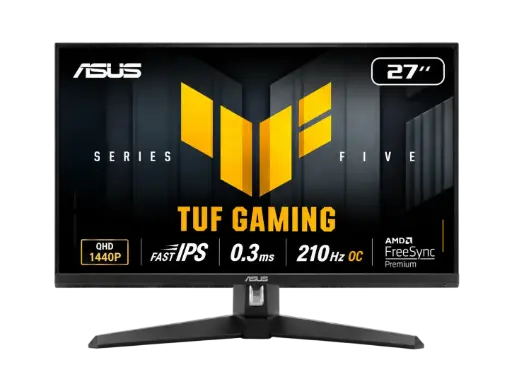
What Is Monitor Refresh Rate?
Refresh rate describes how many times a monitor can refresh the displayed image each second and is measured in Hertz, or Hz.
A 165Hz display can refresh up to 165 times per second, while a 280Hz monitor can refresh up to 280 times per second under supported conditions.
As refresh rates increase, motion can appear smoother and the interval between individual display refreshes becomes shorter.
This is particularly relevant to fast-paced games such as competitive shooters, where players frequently make rapid camera movements and react to events happening within fractions of a second.
However, refresh rate should not be considered alone. Your PC needs to generate sufficiently high frame rates to make effective use of a high-refresh gaming monitor.
165Hz 280Hz Monitors: Moving Beyond Mainstream Gaming
Comparing 165Hz 280Hz Monitors represents an important decision for gamers moving from mainstream high-refresh gaming toward more competitive displays.
165Hz already provides a smooth gaming experience and can work well for a broad range of gaming genres. It is also a practical target for PCs that cannot consistently produce extremely high frame rates.
Moving toward 280Hz places greater emphasis on competitive performance.
A 280Hz monitor can be particularly attractive for esports players with powerful gaming PCs capable of generating very high FPS in games such as competitive shooters.
The decision should therefore depend on both your games and your PC.
For graphically intensive single-player titles, increasing resolution or image quality may sometimes provide more noticeable value than moving from 165Hz to 280Hz.

280Hz 480Hz Monitors for Competitive Players
The comparison between 280Hz 480Hz Monitors moves further into enthusiast and esports territory.
At this level, the monitor is designed around users who prioritize motion performance and responsiveness.
A 480Hz display can refresh substantially more frequently than a conventional gaming monitor, but taking advantage of that capability requires an appropriate combination of hardware and software.
The CPU becomes especially important when targeting extremely high frame rates. While the GPU still matters, competitive games running at lower resolutions and optimized graphics settings can become increasingly dependent on processor performance.
Gamers considering this category should evaluate:
- CPU performance
- GPU performance
- Game engine limitations
- Target FPS
- Resolution
- Response characteristics
- Adaptive-sync support
The highest refresh rate does not automatically provide the best overall gaming experience for every player.

480Hz 720Hz Monitors: Extreme Refresh Rates
480Hz 720Hz Monitors represent the extreme end of high-refresh gaming displays.
A 480Hz monitor is already designed primarily around users seeking exceptional motion performance. Moving toward 720Hz pushes this concept even further.
These monitors are most relevant to highly competitive gaming scenarios where extremely high frame rates can be generated and small improvements in motion clarity and latency are valued.
For an average gamer playing cinematic AAA games at high resolutions, however, this level of refresh rate may provide less practical benefit than improvements in resolution, HDR, contrast, or screen size.
The PC requirements are another consideration.
Generating hundreds of frames per second can require a powerful CPU and GPU combination, and not every game can operate at these frame rates regardless of hardware.
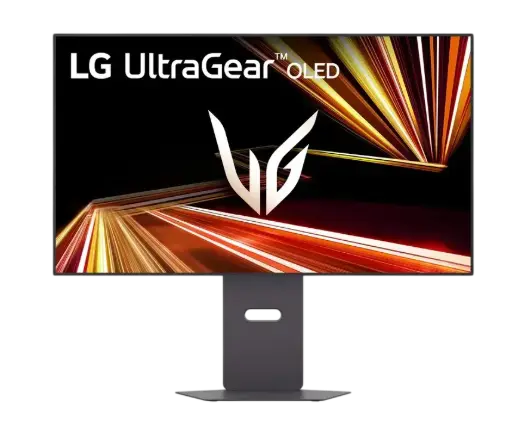
240Hz 480Hz Monitors: Which Is Better?
Comparing 240Hz 480Hz Monitors can help illustrate the difference between conventional competitive gaming and extreme esports-focused displays.
240Hz is already widely associated with competitive gaming. For many players, it provides an excellent combination of smooth motion, responsiveness, and achievable PC performance.
480Hz goes considerably further.
The potential advantage becomes more relevant when:
Your game supports extremely high FPS.
Your PC can consistently produce those frame rates.
Competitive responsiveness is more important than resolution.
You can perceive and benefit from the improved motion performance.
For users who also play demanding AAA games, a 240Hz monitor with a higher resolution or stronger image-quality characteristics may sometimes offer a more versatile experience.
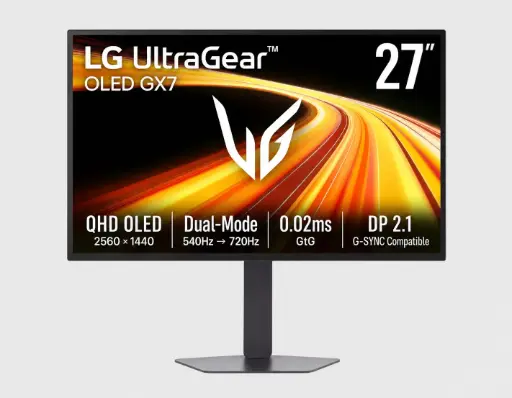 165Hz 330Hz Monitors: Performance vs Practicality
Monitor Size Guide: From 24 in to 49 in, 5K, 120Hz and 165Hz Displays
The 165Hz 330Hz Monitors comparison covers another interesting range.
A 165Hz gaming monitor can serve both casual and competitive gaming, while a 330Hz-class display moves significantly closer to esports-focused performance.
This creates a useful choice for players who want more speed without necessarily moving into the 480Hz or 720Hz categories.
Before upgrading, consider your current FPS.
If your PC typically produces 120–160 FPS in the games you play, purchasing a 330Hz display will not suddenly make the computer generate 330 frames per second.
The monitor and gaming PC should therefore be matched as a complete system.
165Hz vs 240Hz vs 280Hz vs 330Hz vs 480Hz vs 720Hz
The refresh-rate categories can be understood according to their general gaming focus:
Refresh RateTypical Focus165HzMainstream high-refresh gaming240HzCompetitive gaming280HzPerformance-focused competitive gaming330HzHigh-level competitive gaming480HzEnthusiast/esports performance720HzExtreme high-refresh competitive setups
These categories should not be interpreted as strict rankings of monitor quality.
A premium 165Hz monitor can offer better resolution, contrast, HDR performance, or color quality than another display with a much higher refresh rate.
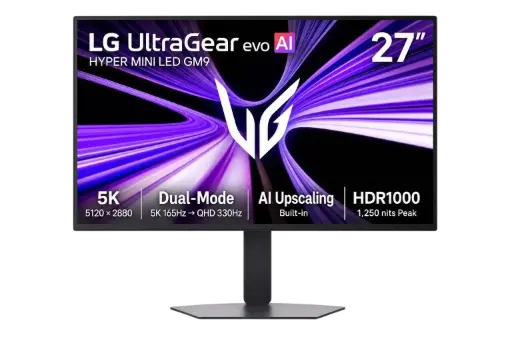
Does Higher Refresh Rate Always Mean a Better Monitor?
No. Refresh rate is only one part of display performance.
When comparing gaming monitors, you should also evaluate:
Resolution – FHD, QHD, UHD, or another format.
Panel Technology – influences contrast, colors, viewing characteristics, and motion performance.
Response Performance – affects how quickly pixels transition.
Input Latency – particularly relevant for competitive gaming.
Adaptive Sync – helps coordinate display refresh behavior with GPU output.
Screen Size – influences immersion and pixel density.
HDR and Contrast – important for image quality.
A 480Hz monitor isn't automatically better for you than a 165Hz display if your priority is 4K gaming, professional content creation, or cinematic image quality.
How Much FPS Do You Need for a High-Refresh Monitor?
A high-refresh monitor provides the greatest value when the PC can produce frame rates that make meaningful use of its capabilities.
For example, pairing a 480Hz display with a system producing only 80 FPS does not allow the game to provide 480 unique frames every second.
This is why competitive gamers often adjust graphics settings and sometimes use lower resolutions to increase FPS.
The relationship is:
CPU + GPU + Game + Graphics Settings → FPS → Monitor Refresh Rate
Your monitor purchase should therefore be based partly on the performance your PC can realistically achieve.
Resolution vs Refresh Rate: Which Matters More?<
Monitor Size Guide: From 24 in to 49 in, 5K, 120Hz and 165Hz Displays/h2>
This depends entirely on the type of gaming experience you want.
For competitive esports:
Higher FPS + Higher Refresh Rate may be the priority.
For immersive AAA gaming:
Higher Resolution + Image Quality may be more important.
For mixed gaming:
A balance between resolution and refresh rate is often preferable.
For example, some users may prefer QHD at a strong refresh rate instead of choosing either extremely high-refresh FHD or demanding high-resolution 4K.
There is no universal winner because the two specifications improve different aspects of the visual experience.
Black Monitors for Gaming Setups
Black Monitors remain one of the most common choices for gaming PCs.
Black bezels and stands can blend naturally with gaming peripherals, PC cases, speakers, keyboards, and darker desk setups.
Another advantage is component flexibility. Because black is widely used across gaming hardware, creating a consistent setup can be easier.
RGB lighting can also contrast effectively against black hardware, allowing users to customize the visual theme without changing the monitor itself.
However, monitor color has no direct impact on refresh rate, response performance, resolution, or gaming FPS.
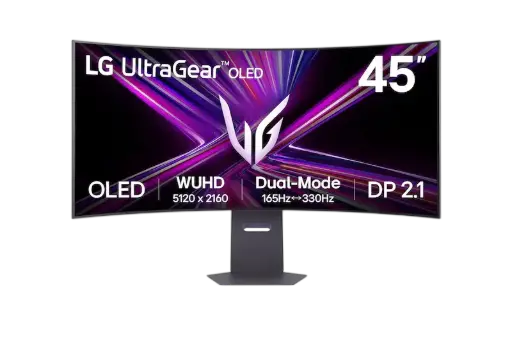
White Monitors for Clean Gaming Setups
A White gaming monitor can provide a different aesthetic for users building an all-white or lighter desktop setup.
White displays can pair particularly well with white PC cases, keyboards, mice, desks, and other accessories.
Availability can be more limited depending on the exact refresh rate and specifications required, so users building a white gaming setup should avoid compromising important performance features purely to maintain the color theme.
Performance should come first:
Refresh Rate → Resolution → Panel → Response → Connectivity → Color.
This approach allows aesthetics to complement the setup rather than determine its capabilities.
Black vs White Monitors: Does Color Matter?
From a performance perspective, there is no inherent advantage to choosing Black or White.
The decision is primarily about:
Personal style
Desk design
PC color
Peripheral matching
Product availability
A Black 240Hz monitor and White 240Hz monitor with otherwise identical specifications should not perform differently simply because of their exterior color.
Therefore, select the required specifications first and choose your preferred design afterward.
Which Refresh Rate Should You Choose?
For many gamers, 165Hz provides a strong entry into high-refresh gaming. Competitive players may benefit from 240Hz, 280Hz, or 330Hz depending on their PC performance and games.
The jump to 480Hz and beyond is more specialized and primarily targets users who can generate extremely high frame rates and prioritize competitive performance above resolution and visual detail.
Before buying, ask:
What games do I play?
What FPS does my PC produce?
What resolution do I want?
Do I prioritize speed or image quality?
Is the monitor mainly for competitive gaming?
These questions are more important than simply choosing the largest Hz number.
Choose High Refresh Rate Monitors Based on Your Gaming Style
Choosing between 165Hz 280Hz Monitors, 280Hz 480Hz Monitors, 480Hz 720Hz Monitors, 240Hz 480Hz Monitors, and 165Hz 330Hz Monitors ultimately depends on your gaming style and PC performance.
165Hz can provide an excellent experience for mainstream gaming, while 240Hz, 280Hz, and 330Hz move increasingly toward competitive play. 480Hz and 720Hz target highly specialized high-frame-rate gaming environments.
Once you determine the performance level you need, you can choose between Black Monitors and White monitors to match the visual style of your gaming setup.
The best gaming monitor is not simply the one with the highest refresh rate. It is the display that creates the right balance between refresh rate, FPS, resolution, panel performance, response behavior, screen size, PC hardware, and design.


